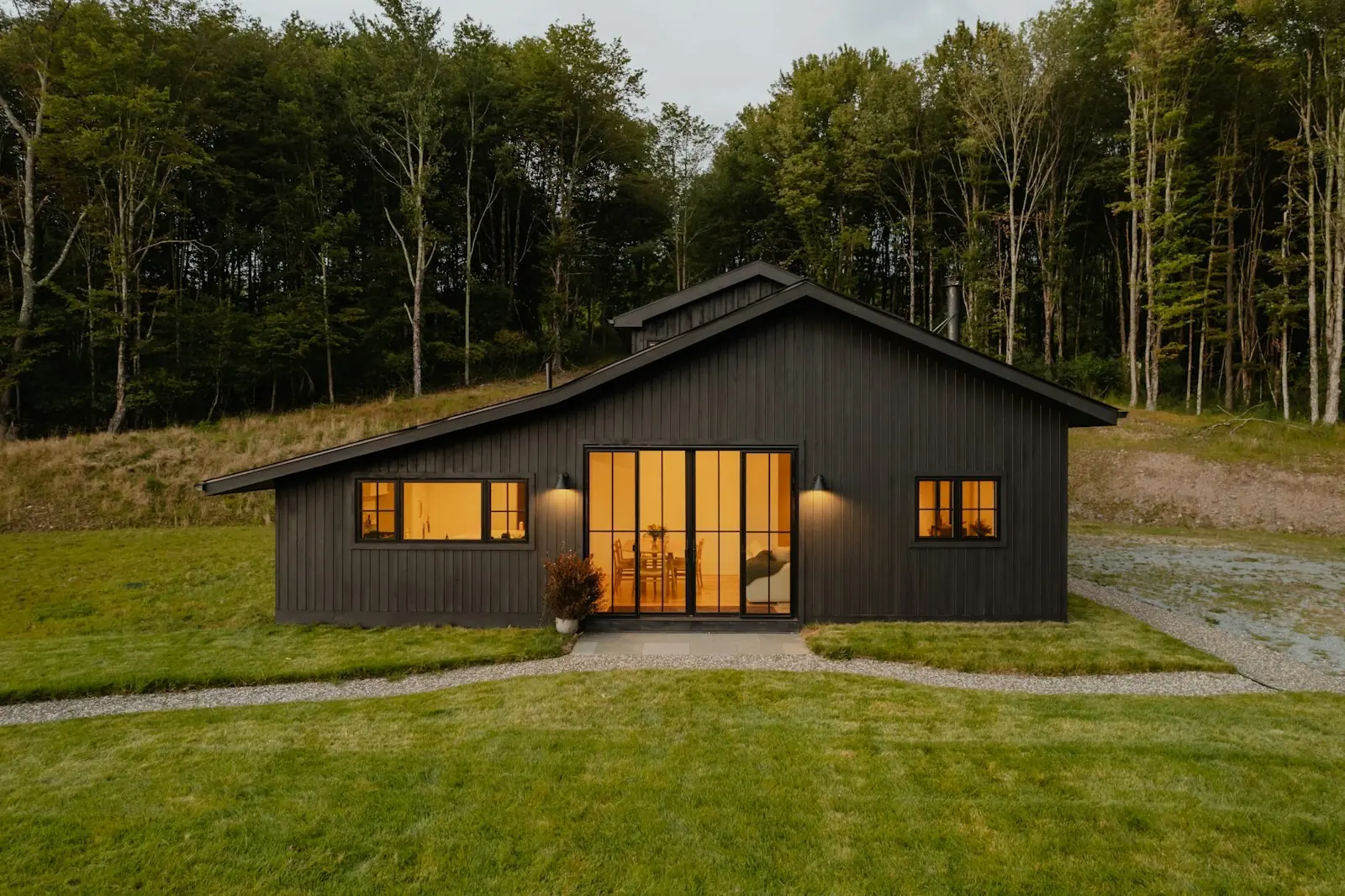
A modular home in New York typically costs $150–$300+ per square foot all-in (module, delivery, foundation, site work, and finishes) — often 10–20% less than comparable stick-built. A finished 2,000 sq ft modular home commonly lands in the $300,000–$600,000+ range depending on site and finishes.
- Roughly $150–$300+ per sq ft turnkey on Long Island
- Often 10–20% cheaper and faster than stick-built
- Site work (foundation, utilities, permits) is a major budget line
- Financed like any site-built home
If you are searching for modular home costs in New York, here is the short answer: expect to budget $150,000 to $400,000 or more for a complete, move-in-ready modular home on Long Island or in the Tri-State area in 2026. That range covers a basic ranch to a fully customized two-story, site-prepped and permitted. The wide spread exists because land, site work, municipal fees, and finish level each carry significant weight — sometimes more than the factory modules themselves. This post breaks down every layer so you can plan with confidence.
What You Are Actually Paying For
A modular home price has several distinct buckets. Understanding them prevents sticker shock when your first quote arrives.
- The modules (factory cost): The off-site-built sections typically run $80 to $160 per square foot at the factory gate, depending on configuration, finish grade, and manufacturer. A 1,400 sq ft ranch might start around $112,000 to $224,000 for the modules alone.
- Site preparation and foundation: Long Island's water table, soil conditions, and frost depth (typically 36 inches) drive foundation cost higher than national averages. Full basement or crawlspace foundations commonly add $30,000 to $80,000. Grading, utility hookups, and access can add another $10,000 to $30,000.
- Set and crane work: A crane to set modules on the foundation typically runs $5,000 to $15,000 for a one- or two-day set, depending on site access and home size.
- On-site completion: After the crane leaves, a general contractor finishes the home — connecting modules, completing the roofline, installing mechanicals, and finishing interiors. This phase often represents 20 to 30 percent of total project cost and is where experience matters most.
- Permits and municipal fees: Nassau and Suffolk County both require full building permits for modular construction. Permit fees, engineering stamps, and inspection costs vary by municipality but budget $5,000 to $15,000 for Long Island jurisdictions. Some towns require additional variance review, especially for lots under 10,000 square feet or in flood zones.
- Utility connections: Connecting to public water, sewer, gas, and electric adds cost that varies dramatically by lot location. Rural Suffolk lots may require well and septic, which alone can run $25,000 to $50,000.
Modular Home Styles and Realistic Price Ranges
At Milton's Construction we work with several modular configurations. Here are realistic all-in cost ranges for completed, permitted homes delivered to Long Island addresses in 2026:
- Ranch (1,200 to 1,600 sq ft): $185,000 to $290,000
- Cape Cod (1,400 to 1,800 sq ft): $210,000 to $330,000
- Raised Ranch (1,400 to 2,000 sq ft): $230,000 to $350,000
- Two-Story Colonial (1,800 to 2,600 sq ft): $270,000 to $420,000
- Split Level or Chalet (custom footprint): $280,000 and up
These figures assume average Long Island site conditions. A challenging lot — steep grade, poor soil, flood zone overlay, or difficult access — can push any of these ranges $30,000 to $70,000 higher. You can explore the full range of configurations we offer at our modular homes page.
How Modular Compares to Stick-Built New Construction
Site-built custom homes in Long Island routinely run $250 to $400 per square foot all-in, meaning a 1,600 sq ft home can easily exceed $450,000 before land. Modular construction saves money in two ways: the factory controls weather delays and material waste, and the predictable timeline reduces carrying costs on construction loans. For comparable finish levels, modular typically delivers a 10 to 20 percent cost advantage over stick-built — with the same code compliance, since New York-bound modular homes are built to the same NYS Building Code as site-built homes and inspected at the factory by a third-party agency before delivery. If you want to compare approaches, our frame-to-finish construction service covers traditional site-built work as well.
Timeline: What to Expect
One underrated advantage of modular is the compressed schedule. A typical Long Island project runs:
- Design and permitting: 8 to 16 weeks (municipal review times vary significantly across Nassau and Suffolk)
- Factory production: 12 to 20 weeks after permit approval and deposit
- Site prep and foundation: Runs concurrently with factory production
- Set day and on-site completion: 6 to 14 weeks post-set
Total from contract to certificate of occupancy: roughly 10 to 18 months. That is often 3 to 6 months faster than a comparable site-built project. Our architecture and design team can start the design-build process and handle municipal coordination from the outset.
Local Considerations That Affect Your Budget
Flood Zones and Elevation Requirements
Much of the south shore of Long Island — including areas of West Babylon, Babylon, Lindenhurst, and Amityville — falls within FEMA flood zones. Homes in AE or VE zones must be elevated to Base Flood Elevation plus freeboard. This adds foundation cost and can also increase homeowner's insurance premiums significantly. Factor this in early.
Zoning and Setbacks
Long Island towns enforce strict setback requirements. Before purchasing land or proceeding with a modular design, verify that your lot can accommodate the footprint you want. Some municipalities also require architectural review that extends the permitting timeline. Our team covers all of Long Island including Suffolk County and understands local zoning nuances.
Utilities and HVAC
New construction is an ideal time to install an efficient heating and cooling system. As an authorized MRCOOL distributor and installer, Milton's Construction can integrate a ductless DC inverter heat pump or multi-zone mini-split system into your modular home during construction — often at a lower cost than retrofitting later. Learn more about our HVAC services.
Financing a Modular Home in New York
Modular homes qualify for the same conventional, FHA, and VA mortgage products as site-built homes — provided they are permanently affixed to a foundation, which is standard practice. Construction-to-permanent loans are common for new builds. Milton's Construction works with Enhancify financing, which lets you check your rate with no impact to your credit score.
Why Hiring a Licensed General Contractor Matters
The factory builds the modules. But the site work, foundation, on-site completion, permit coordination, and final inspections all require an experienced licensed general contractor who knows Long Island's municipalities. Errors in sequencing, utility rough-ins, or final tie-ins are expensive to fix after the crane has left. With 40 years of licensed and insured contracting experience in Nassau, Suffolk, and the Tri-State area, Milton's Construction manages the entire process — from initial design through certificate of occupancy.
Ready to find out what a modular home would cost on your specific lot? Call us at (631) 741-0199 or request a free estimate online. We will review your site, walk you through style options, and give you a detailed, no-obligation cost breakdown — so you can make a confident decision before committing a dollar.

Founder of Milton's Construction. Four decades building and remodeling homes across Long Island. More about us →