If you have ever wondered why your neighbor's heating and cooling bills are noticeably lower than yours, there is a reasonable chance they switched to a ductless mini-split system. Mini-splits have become one of the most popular HVAC upgrades on Long Island over the last decade, and for good reason. They deliver targeted comfort, run at remarkable efficiency levels, and can be installed without tearing into walls to run ductwork. This post explains exactly how they work and what makes them so effective — so you can decide whether one makes sense for your home.
The Basic Mechanics: Refrigerant, Not Resistance
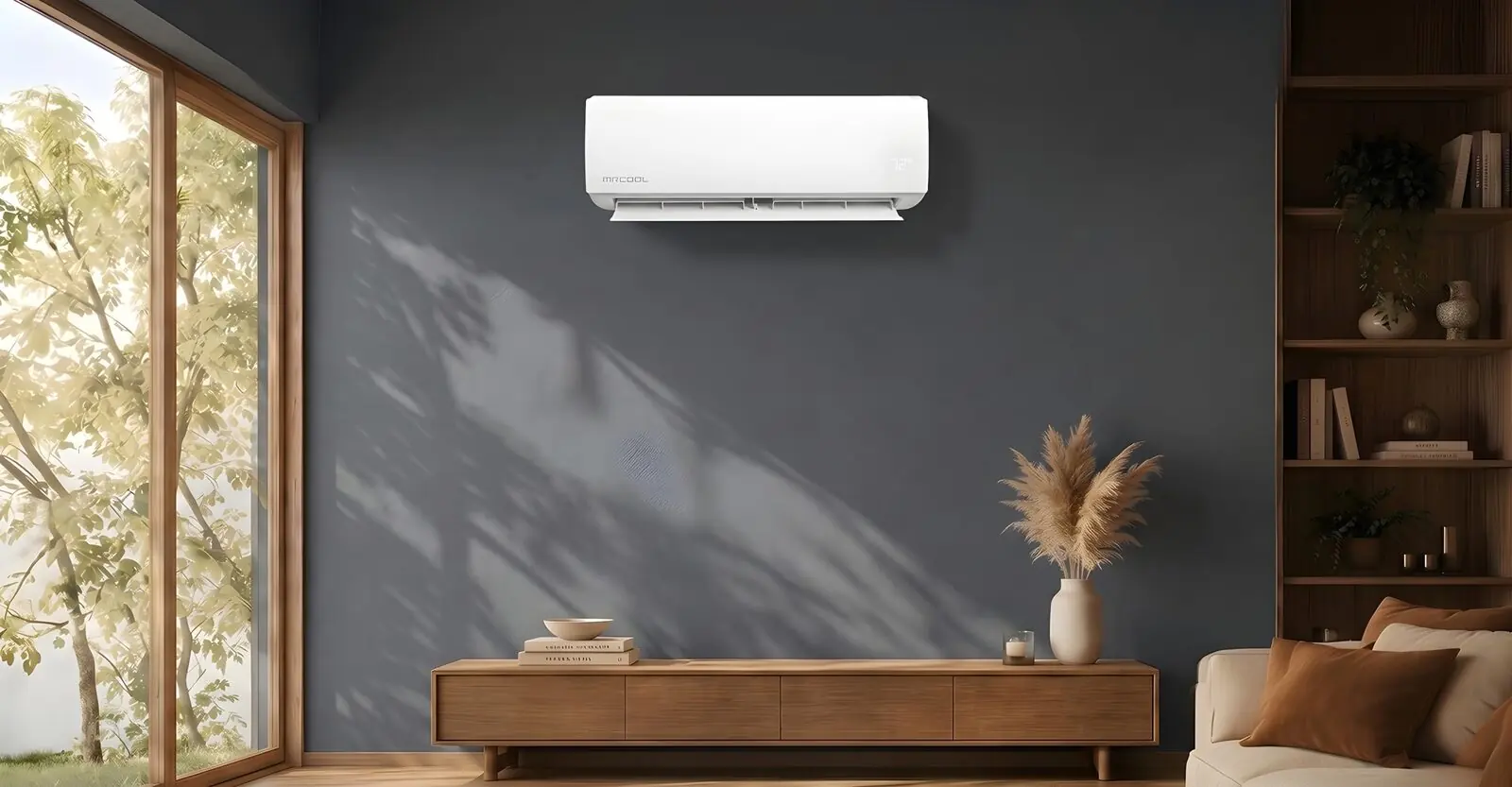
A ductless mini-split is a heat pump system. It moves heat rather than generating it, which is the core reason it beats traditional electric resistance heating in efficiency. The system has two main components: an outdoor compressor/condenser unit and one or more indoor air-handling units (called heads). Refrigerant circulates between them through a set of insulated copper lines that pass through a small hole — typically three inches — in the wall.
In cooling mode, the indoor unit absorbs heat from the room air and transfers it to the refrigerant, which carries that heat outside and releases it through the condenser. In heating mode, the cycle reverses: the outdoor unit extracts heat energy from the outside air — even when it is cold — and moves it inside. A quality inverter-driven heat pump like those in the MRCOOL lineup can extract usable heat from outdoor air down to around -13 degrees Fahrenheit, which is well within the range of any Long Island winter.
Why Inverter Technology Changes Everything
Older HVAC systems — central forced air, window units, baseboard heat — operate on a simple on/off cycle. They run at full capacity until the thermostat is satisfied, then shut off completely. This cycling wastes energy and creates uncomfortable temperature swings.
Modern mini-splits use DC inverter compressors. The compressor speeds up or slows down continuously to match the exact load the room demands at any given moment. When it is mildly cool outside, the system hums along at low capacity. On a 95-degree August afternoon in West Babylon, it ramps up. The result is a system that almost never wastes energy overshooting its target, and one that maintains a much steadier indoor temperature than a traditional system can.
This is why mini-splits are rated in terms of SEER (Seasonal Energy Efficiency Ratio) for cooling and HSPF (Heating Seasonal Performance Factor) for heating. Many MRCOOL units achieve SEER ratings of 20 or higher, compared to a typical central air system at 14 to 16 SEER. In practical terms, you can expect to use 30 to 50 percent less electricity for the same amount of cooling or heating versus older technology.
Single-Zone vs. Multi-Zone Systems
One of the most practical advantages of mini-splits is zoning. Each indoor head operates independently, so you are not conditioning rooms that are unoccupied.
- Single-zone systems pair one outdoor unit with one indoor head. Common applications include a home addition, a finished basement, a garage conversion, a sunroom, or a room that never got adequate coverage from the central system.
- Multi-zone systems connect multiple indoor heads to a single outdoor unit. You might serve three or four bedrooms plus a main living area from one compressor. Each zone has its own remote or wall control and runs independently.
For whole-house applications, a multi-zone system is often the most cost-effective path. For targeted problem areas — that one bedroom that bakes in summer or the in-law suite addition that does not connect to the main ductwork — a single-zone unit is typically a faster, lower-cost solution. Milton's Construction handles both approaches as an authorized MRCOOL distributor and installer; you can review options on the HVAC and MRCOOL services page.
Installation: What the Process Actually Looks Like
A standard single-zone installation on Long Island typically takes one to two days. Here is what the process involves:
- Mounting the indoor head on the wall, usually high up to distribute conditioned air evenly across the room.
- Running refrigerant lines, a condensate drain line, and electrical wiring through the wall and down to the outdoor unit.
- Setting and securing the outdoor condenser on a pad or wall bracket, with enough clearance for airflow and service access.
- Vacuuming and pressure-testing the refrigerant lines, then commissioning the system.
In New York State, mini-split installation requires a licensed HVAC contractor. Nassau and Suffolk counties also require an electrical permit for the dedicated circuit that powers the outdoor unit, and some municipalities require a separate mechanical permit. A qualified contractor pulls all required permits as part of the job — something worth confirming before hiring anyone. Milton's Construction is fully licensed and insured and handles the permit process as standard practice.
If you are adding a mini-split as part of a larger project — a home addition, a kitchen remodel, or a bathroom renovation — the HVAC work can typically be coordinated within the same scope without scheduling a separate contractor.
Cost Ranges and Rebates
On Long Island, a professionally installed single-zone mini-split system generally runs between $3,500 and $6,500 depending on the BTU capacity needed, the complexity of the line set run, and whether electrical panel work is required. Multi-zone systems start around $7,000 for two zones and scale from there. These are installed costs — equipment, labor, permits, and startup.
PSEG Long Island and Con Edison both offer rebates for qualifying heat pump installations, and federal tax credits under the Inflation Reduction Act currently cover 30 percent of the installed cost of a qualifying heat pump system, up to $2,000 per year. These incentives meaningfully reduce the net cost and have made 2024 through 2026 a particularly good window to act. If budget is a concern, Milton's Construction offers financing through Enhancify with no impact to your credit score to check your rate.
Is a Mini-Split Right for Your Home?
Mini-splits work well in most Long Island housing stock — capes, raised ranches, split-levels, colonials, and older homes that were built before central air was standard. They are also the natural HVAC solution for modular homes and for any new construction project where the design allows for flexible mechanical placement.
They are not always the right fit for every situation. Very large open floor plans sometimes benefit from a hybrid approach combining a mini-split with supplemental forced-air. And if your home already has functional ductwork in good condition, a full replacement analysis is worth doing before you commit to a ductless system. The right answer depends on your home's layout, your existing mechanical system, and how you use each space.
Get a Free Assessment from Milton's Construction
Milton's Construction has been serving Long Island homeowners for 40 years from our base in West Babylon. As an authorized MRCOOL distributor and installer, we size, supply, and install systems ourselves — no subcontractors, no markup chain. We cover all of Long Island including Nassau and Suffolk County, and the broader Tri-State area including New Jersey and Pennsylvania. If you want to know exactly what a mini-split system would cost for your home, the best next step is a free on-site estimate. Contact us online or call (631) 741-0199 to schedule — we will assess your space, walk through the options, and give you a straight answer on what makes sense for your situation.

Founder of Milton's Construction. Four decades building and remodeling homes across Long Island. More about us →