Building a custom home on Long Island is one of the most significant investments a family can make — and one of the most rewarding when it goes right. Whether you are starting with a vacant lot in Suffolk County or tearing down an aging structure to build new, the process follows a clear sequence of steps. Understanding that sequence upfront saves money, prevents delays, and helps you hold every contractor accountable. Here is a practical, honest walkthrough of what to expect from the first conversation to the day you get your certificate of occupancy.
Step 1: Define Your Program and Budget
Before a single drawing is produced, you need to know what you are building and what you can spend. Custom homes on Long Island typically run $250–$450 per square foot for frame-to-finish construction, depending on finishes, site conditions, and current material costs. A 2,400-square-foot colonial could range from roughly $600,000 to over $1 million. These are real ranges — scope and specification drive the final number more than any rule of thumb.
At this stage, decide on the broad program: number of bedrooms and bathrooms, garage, basement, mechanical preferences (including whether a high-efficiency HVAC system such as a MRCOOL ductless mini-split or heat pump fits your energy goals), and any special spaces. Write it down. It becomes the brief your architect and builder work from.
If budget is a concern, a custom modular home can deliver the same finished result at a lower cost and faster schedule than site-built construction — worth a serious look before committing to either path.
Step 2: Secure Your Lot and Conduct Due Diligence
Lot availability on Long Island is limited, and not every parcel is straightforwardly buildable. Before purchase, verify:
- Zoning and setbacks. Nassau and Suffolk counties have dozens of municipalities, each with its own zoning code. Minimum lot size, front/rear/side setbacks, and maximum lot coverage vary widely town by town.
- Utilities and sewer. Many Long Island communities rely on private septic systems. Confirm whether public sewer connection is available or whether you will need a Suffolk County Department of Health Services (SCDHS) approved septic design.
- Flood zone status. Coastal and low-lying areas of Nassau and Suffolk carry FEMA flood zone designations that affect foundation type, finished floor elevation, and insurance cost.
- Deed restrictions and HOA rules. Some communities restrict architectural style, height, or materials.
A builder experienced in Long Island new construction can help you read a lot's constraints before you close on it — a conversation worth having early.
Step 3: Design and Architecture
With a lot and a budget confirmed, you engage an architect or use a design-build firm that handles both. Integrated architecture and design under one roof accelerates the process because the design team already understands constructability and local pricing. Expect schematic design through construction documents to take three to six months for a custom home, depending on complexity and how quickly decisions are made.
Long Island municipalities require stamped architectural drawings, structural engineering, and in many cases energy compliance documentation (New York State Energy Conservation Construction Code) before a building permit is issued.
Step 4: Permitting
Permitting is where many Long Island projects stall. Plan for it. Depending on the town — Babylon, Islip, Oyster Bay, Hempstead, and others each run their own building departments — permit review can take anywhere from six weeks to six months for a new single-family home. Submit complete, code-compliant drawings the first time to avoid revision cycles that restart the clock.
Required approvals typically include a building permit, plumbing permit (New York requires a licensed master plumber), electrical permit, and SCDHS approval for septic if applicable. A builder offering full frame-to-finish construction will manage permit submissions as part of the project, not as an add-on.
Step 5: Site Preparation and Foundation
Once permits are in hand, site work begins. This phase includes clearing, grading, excavation, and foundation work. On Long Island, poured concrete foundations are standard; flood-zone lots may require pier or elevated slab construction. If an existing structure occupies the lot, professional demolition is the first physical step, and it must be permitted separately.
Site work and foundation typically run four to eight weeks depending on soil conditions and weather. Long Island's clay-heavy soils in some areas and the region's freeze-thaw cycle mean foundation depth and drainage details matter.
Step 6: Framing Through Mechanical Rough-In
This is the most visually dramatic phase — the house takes shape fast. Framing a 2,400-square-foot home takes roughly four to eight weeks with a full crew. Following framing, rough mechanical trades work in sequence: rough plumbing, HVAC ductwork or refrigerant lines, and electrical rough-in. Inspections happen at each stage before walls close.
HVAC system selection happens before rough-in. DC inverter heat pump systems — like those Milton's Construction installs as an authorized MRCOOL distributor — are increasingly popular on Long Island for their efficiency and the New York State tax credit eligibility. Discuss this with your builder before framing starts so the rough-in is designed correctly.
Step 7: Insulation, Drywall, and Finishes
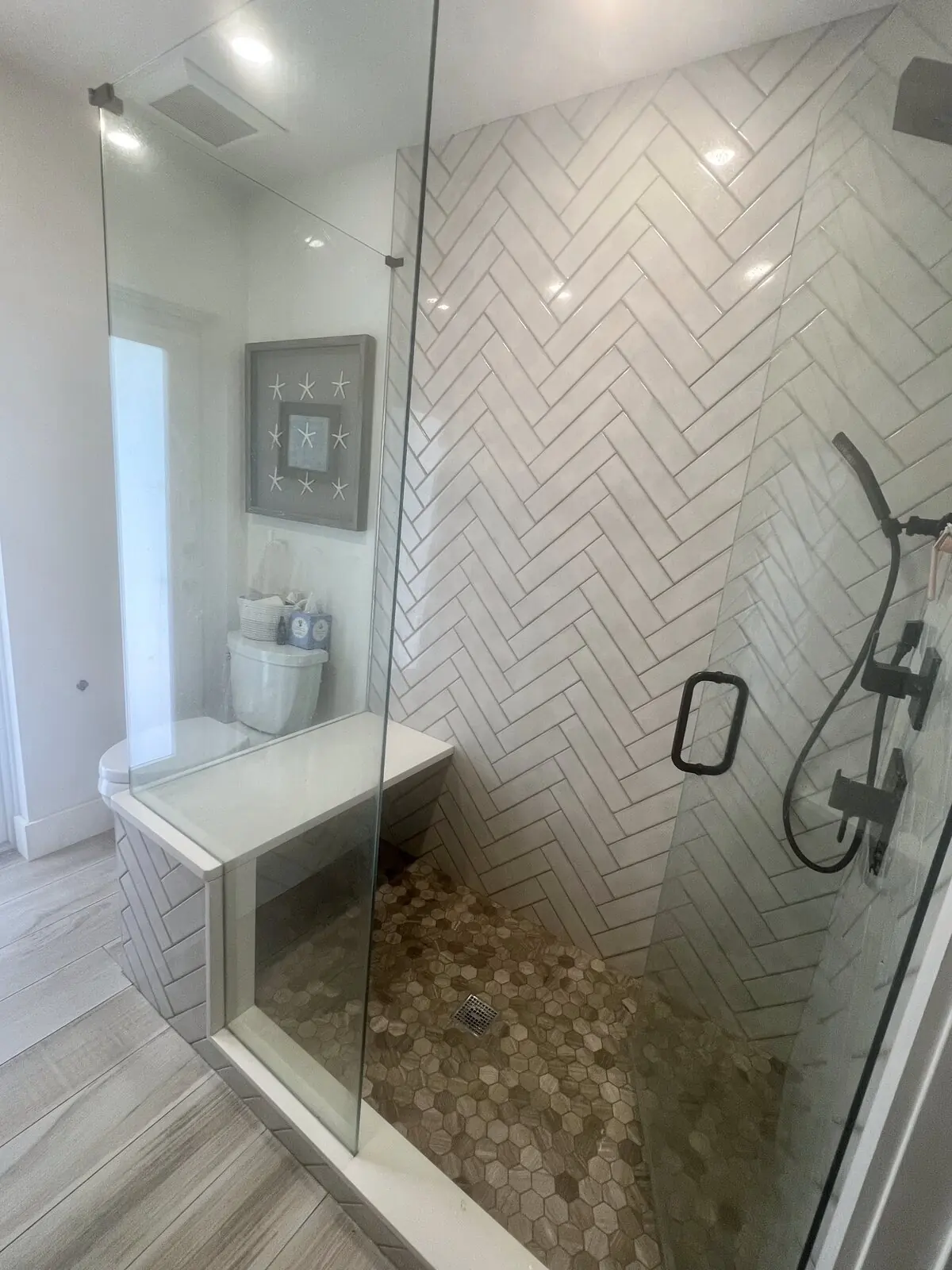
After rough inspections are passed, insulation goes in, drywall follows, and then the finish work begins: flooring, tile, cabinetry, trim, painting, fixture installation. This phase takes the longest and involves the most subcontractors working in sequence. A well-organized general contractor maintains a schedule that keeps trades moving without stepping on each other.
If your project includes a full custom kitchen or high-spec bathrooms, allow extra lead time for cabinetry and specialty tile — Long Island supply chains for custom millwork can run 10–14 weeks.
Step 8: Final Inspections and Certificate of Occupancy
Before you move in, the building department conducts final inspections covering structural, plumbing, electrical, and mechanical systems. A certificate of occupancy (CO) is issued when all inspections pass and the property meets code. Do not close on a newly built home or move in without a CO — it is a legal requirement in New York and a practical protection for you.
Total timeline from permit submission to CO: 12 to 20 months is realistic for a custom site-built home on Long Island. Modular construction can compress the schedule to 8 to 12 months in many cases.
Why Local Experience Matters
Every step above involves Long Island-specific knowledge: which towns have backlogged building departments, where SCDHS reviews take longest, which soil conditions require engineering attention, and how to design for the coastal climate. A builder who works exclusively in Nassau and Suffolk counties — and has for decades — carries that institutional knowledge into every project.
Milton's Construction has been building on Long Island and across the Tri-State area for 40 years. From empty lot to certificate of occupancy, the team handles architecture and design, permitting, site work, framing, mechanical trades, and every finish. View completed projects at our project gallery, or explore financing options through our partner Enhancify to understand what is possible within your budget.
If you are ready to talk specifics — lot address, square footage, timeline, budget — call Milton's Construction at (631) 741-0199 or request a free estimate online. There is no obligation, and the conversation will tell you quickly what building your custom home on Long Island actually looks like.

Founder of Milton's Construction. Four decades building and remodeling homes across Long Island. More about us →