If you are adding a room to your home — a sunroom, a bonus room over the garage, an in-law suite, or a finished garage space — heating and cooling that space is not an afterthought. It is one of the first decisions you need to make, because the HVAC system you choose affects framing, electrical rough-in, wall placement, and finishing costs. The short answer for most Long Island homeowners: a ductless mini-split heat pump is the right system for nearly every addition scenario. Here is why, and what you need to know before you start.
Why Additions and Sunrooms Cannot Simply Tap the Existing System
Most existing central HVAC systems in Nassau and Suffolk County homes were sized for the original square footage. Tying a 400-square-foot addition into an already-loaded air handler often results in uneven temperatures throughout the house, shortened equipment life, and comfort complaints in both the old and new spaces. In many cases the ductwork runs are too long or the equipment tonnage is simply insufficient.
Sunrooms present an additional challenge: they are exposed on three or more sides, see major solar heat gain in summer, and lose heat rapidly in winter. A single register fed from a central system rarely keeps up. Garages are worse — they are not insulated to living-space standards and the thermal load swings wildly.
For home additions and extensions, the cleanest and most cost-effective solution is almost always a standalone system dedicated to the new space.
Ductless Mini-Splits: The Right Tool for the Job
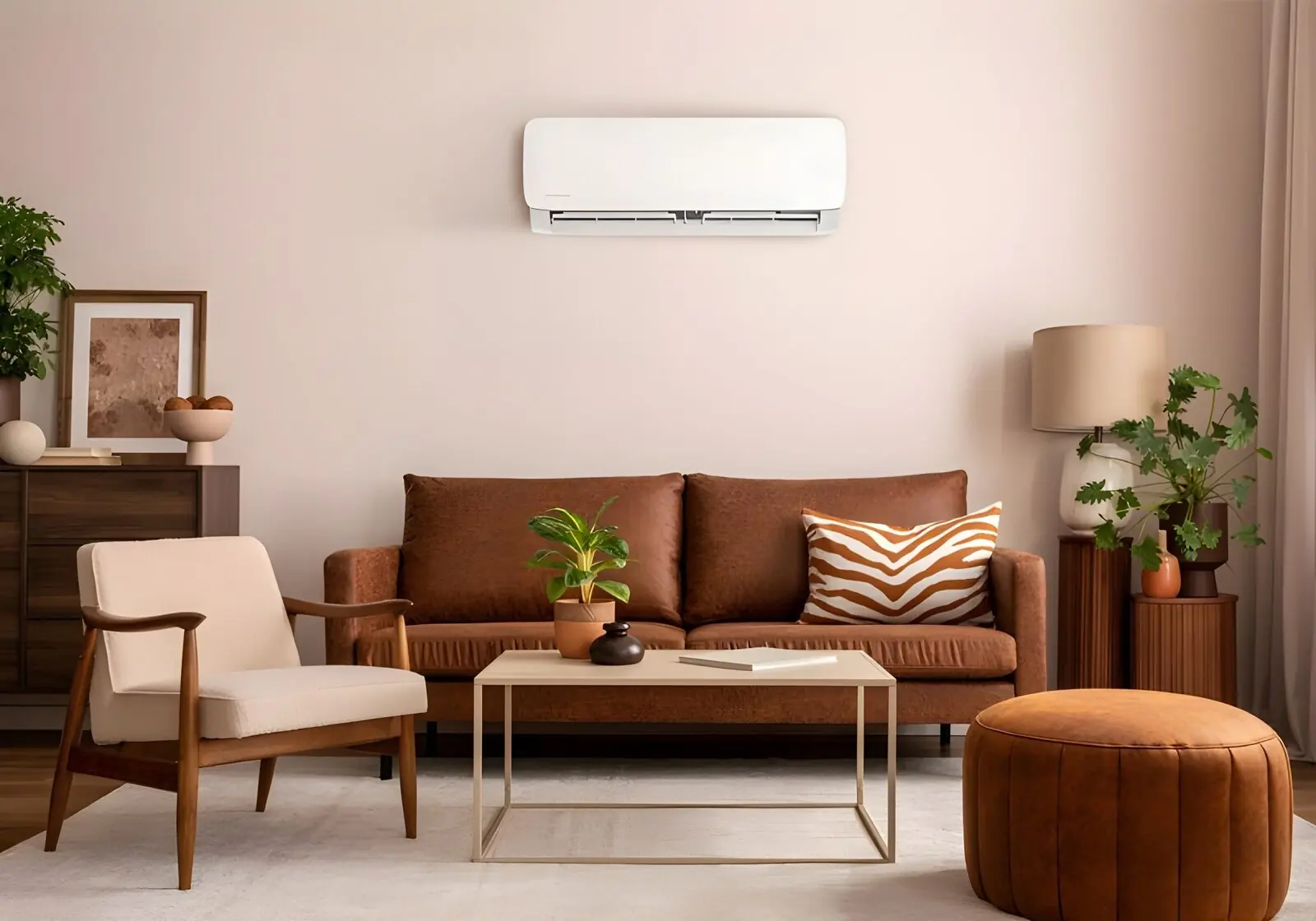
A ductless mini-split consists of an outdoor compressor/condenser unit and one or more indoor air-handler heads mounted high on the wall or ceiling. Refrigerant lines run through a small hole in the wall — typically three inches in diameter — connecting the two. There is no ductwork required.
Why mini-splits work so well for additions
- Zoned comfort: The new space gets its own thermostat and its own capacity. You can heat or cool the addition without running the whole-house system.
- High efficiency: Modern DC inverter heat pumps deliver heating and cooling at SEER ratings of 18 to 30-plus, well above the efficiency of most older central systems. They run on electricity, with no gas line required.
- Heating down to single-digit temperatures: Quality heat pump systems rated for cold climates maintain full heating capacity at outdoor temps as low as 5°F — essential on Long Island where winters regularly dip below freezing.
- Year-round operation: One system handles both heating and cooling. No separate boiler loop, no baseboard zoning battles.
- Minimal structural disruption: No chases, no soffits, no dropped ceilings to hide ductwork.
- Fast installation: A single-zone system for a typical addition can be installed in one day once the rough-in electrical is in place.
As an authorized MRCOOL distributor and installer, Milton's Construction installs MRCOOL ductless systems — one of the most widely respected lines in the residential mini-split market. MRCOOL's DIY and commercial series cover single-zone and multi-zone configurations from 9,000 to 48,000 BTU, with geothermal options available for larger projects.
What Size System Do You Need?
Sizing is done through a Manual J load calculation that accounts for square footage, insulation values, window area, ceiling height, and local climate data. As a rough rule of thumb:
- Small garage or sunroom (150–300 sq ft): 9,000–12,000 BTU (0.75–1 ton)
- Medium addition or finished bonus room (300–600 sq ft): 12,000–18,000 BTU (1–1.5 ton)
- Large addition or in-law suite (600–1,000 sq ft): 18,000–24,000 BTU (1.5–2 ton)
- Full second-story addition or large sunroom addition over 1,000 sq ft: multi-zone or 2–3 ton single-zone system
These are starting points. A properly insulated sunroom with Low-E glass behaves very differently from a three-season room with single-pane panels. Always have the system sized by a contractor who walks the space.
Cost Ranges on Long Island
Installed costs for ductless mini-split systems in the New York metro area — including equipment, refrigerant line sets, electrical disconnect, and labor — typically run:
- Single-zone residential system: $3,500–$6,500 installed
- Multi-zone system (2–4 heads off one outdoor unit): $6,500–$14,000 installed
- Premium cold-climate or commercial-grade systems: $8,000–$18,000+
These figures vary based on the complexity of the line-set run, electrical panel capacity, and any structural work involved. Homeowners who bundle HVAC with a larger addition or remodel often see better pricing because the electrical rough-in and wall access are already open during construction — a strong reason to work with a frame-to-finish contractor who coordinates all trades from the start.
Permits and Code Considerations for Long Island Additions
In Suffolk and Nassau Counties, any addition requires a building permit, and the HVAC system serving that space must be included in the mechanical scope of the permit. Mini-split installation by a licensed contractor is required for permitted work — and a licensed plumbing and HVAC contractor must pull the appropriate mechanical permits.
If you are adding a second story, a modular addition, or an in-law suite, the town building department will review insulation and HVAC as part of the energy code compliance check. New York State adopted IECC 2020 as its energy code baseline, which sets minimum efficiency requirements for heating and cooling equipment. Modern mini-splits comfortably exceed these minimums.
For custom modular homes, HVAC is typically pre-engineered as part of the module package and arrives ready to connect — a significant time saver compared to site-built construction.
Other HVAC Options Worth Knowing
Mini-splits are the right answer most of the time, but not every time. Depending on your project, you may also consider:
- Extension of existing forced-air system: Viable if your current equipment has spare capacity and the ductwork run is short and accessible. Best evaluated by an HVAC professional before committing.
- Electric baseboard heat: Low upfront cost but high operating cost. Fine as a supplemental heat source in a sunroom, poor as a primary system.
- Radiant floor heat: Excellent comfort for slab-on-grade additions like sunrooms or finished basements. Requires a separate heat source (electric or hydronic) and adds cost. Often combined with a mini-split for cooling.
- Geothermal heat pump: The most efficient option available, with operating costs 50–70 percent lower than resistance heat. Higher installation cost and requires adequate land for a ground loop. Milton's Construction installs geothermal systems for qualifying properties.
The right system depends on your budget, the addition type, the existing infrastructure, and how you plan to use the space. A design-build consultation early in the process ensures HVAC is planned alongside the structure — not bolted on at the end.
Financing Your Addition and HVAC Together
Many homeowners finance additions and HVAC upgrades together through Enhancify, Milton's Construction's lending partner, which offers a soft-pull rate check with no impact to your credit score. Wrapping the mechanical scope into the overall project loan often simplifies the process and can cover the full cost of equipment, labor, and permits in one payment.
Get a Free Estimate
Milton's Construction has been building and improving Long Island homes for 40 years. We are a licensed and insured general contractor and an authorized MRCOOL distributor serving Long Island, the Five Towns and South Shore of Suffolk County, and the Tri-State area including New Jersey and Pennsylvania. Whether you are planning a sunroom, a garage conversion, a full home addition, or a new build, we coordinate every trade from the permit application through the final inspection.
Call us at (631) 741-0199 or request a free estimate online and we will schedule a walkthrough of your project. There is no cost and no obligation — just an honest assessment from a contractor who has been doing this work on Long Island since 1984.

Founder of Milton's Construction. Four decades building and remodeling homes across Long Island. More about us →